


The ticker GMHIW represented more than just another obscure market symbol. It was the warrant component of Gores Metropoulos, Inc., a special purpose acquisition company (SPAC) that eventually merged with autonomous driving and lidar company Luminar Technologies.
During the SPAC boom, warrant tickers like GMHIW attracted aggressive traders, long-term speculators, and retail investors searching for leveraged exposure to emerging technologies. Yet many people buying these securities did not fully understand how warrants actually worked, or how quickly they could lose value.
What Was GMHIW?
GMHIW was the publicly traded warrant ticker for Gores Metropoulos, Inc., a SPAC formed to acquire a private company and take it public through a merger.
After Gores Metropoulos merged with Luminar Technologies in 2020, the combined company began trading under the ticker LAZR on Nasdaq. The warrants tied to the SPAC structure continued trading under updated symbols associated with Luminar.
In simple terms, a warrant gives the holder the right but not the obligation to buy company shares at a predetermined exercise price before expiration.
How SPAC Warrants Like GMHIW Worked
SPAC warrants often confuse newer investors because they behave differently from ordinary stocks. Here’s the practical structure behind them:
Key Mechanics include:
- Warrants were usually issued alongside SPAC shares during the IPO
- They traded separately after a certain period
- Holders could later exchange them for common shares
- Most SPAC warrants had an exercise price around $11.50
- Warrants typically expired several years after the merger
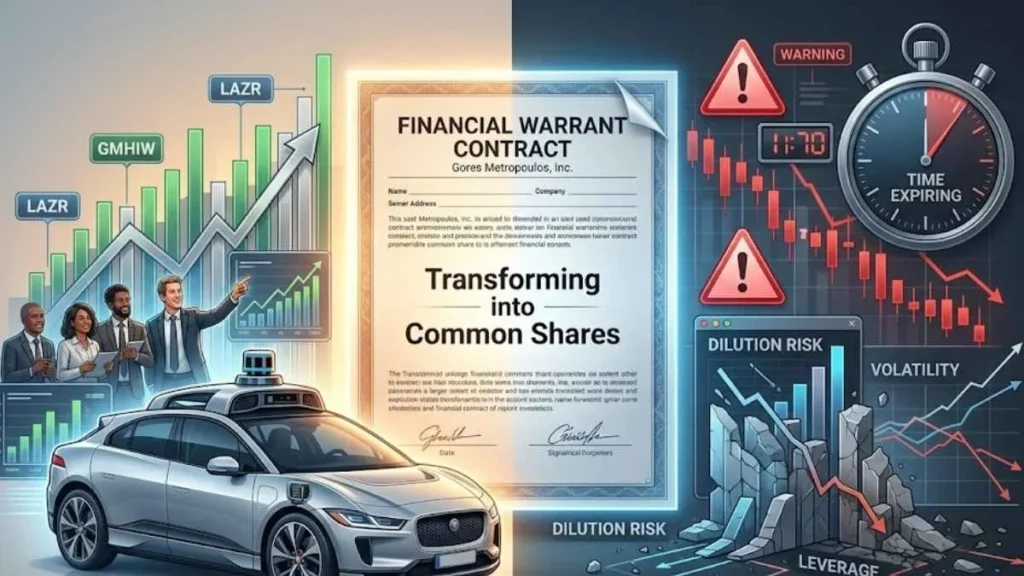
Think of them as long-dated call options created by the company itself rather than exchange-listed derivatives. If Luminar stock traded well above the strike price, GMHIW holders could potentially profit substantially. If the stock stayed below that level, the warrants could become nearly worthless.
Why Investors Became Interested in GMHIW
Timing mattered enormously. GMHIW emerged during one of the most speculative periods in modern market history. Electric vehicles, autonomous driving technology, and next-generation mobility companies were attracting extraordinary investor attention.
Luminar stood out because of its lidar technology, which aimed to help autonomous vehicles “see” their environment using laser-based sensing systems.
The Risks Many Investors Overlooked
SPAC warrants can produce large gains, but they also carry structural risks that ordinary shareholders may never encounter.
This is where many inexperienced traders ran into trouble.
Time Decay and Expiration
Unlike common shares, warrants have expiration dates. If the underlying stock never exceeds the exercise price meaningfully before expiration, the warrant can lose most or all of its value. A stock can remain a functioning business while its warrants become worthless.
Dilution Risk
When warrants are exercised, new shares are created. That increases the total share count and can dilute existing shareholders. For companies already facing growth pressure or cash burn concerns, dilution becomes a serious investor consideration.
Redemption Clauses
Many SPAC warrants include redemption provisions allowing the company to force exercise under certain conditions.
This often surprises retail traders.
For example, if shares trade above a specific threshold for a sustained period, the company may redeem warrants at a nominal price unless holders exercise quickly. Investors who fail to monitor filings can lose value unexpectedly.
The Luminar Connection
Luminar Technologies became one of the more recognizable lidar companies to emerge from the SPAC era. The company positioned itself around high-performance sensor technology designed for autonomous driving systems and advanced driver assistance features.
Luminar attracted interest because it secured partnerships and generated significant visibility within the autonomous vehicle ecosystem. At the time, investors viewed lidar as a potentially essential infrastructure technology for self-driving systems.
Lessons Investors Can Learn From GMHIW
GMHIW serves as a useful case study in speculative investing. Many investors treated SPAC warrants like cheap stocks rather than complex financial instruments. Autonomous driving was one of the hottest themes of the early 2020s. But thematic excitement alone does not guarantee sustainable returns.

Investors who relied purely on momentum often underestimated execution challenges within emerging technologies. Warrants magnify gains, but also losses. That leverage becomes especially dangerous during market downturns or when speculative sentiment fades.
FAQ
What happened to GMHIW after the Luminar merger?
After the merger with Luminar Technologies, the ticker structure changed as the combined company began trading publicly under LAZR-related symbols.
Are SPAC warrants risky?
Yes. SPAC warrants are generally considered high-risk instruments because they involve leverage, expiration dates, redemption clauses, and substantial volatility.
Can warrants expire worthless?
Absolutely. If the underlying stock price does not exceed the exercise price sufficiently before expiration, the warrant may become worthless.
Conclusion
GMHIW represents an important chapter in the SPAC-driven investment cycle that reshaped speculative markets during the early 2020s. For some traders, these warrants created enormous upside opportunities. For others, they highlighted the dangers of investing in complex securities without fully understanding the mechanics behind them.
The broader lesson extends beyond one ticker. Financial instruments tied to emerging technologies often combine compelling narratives with significant structural risk. Investors who study those structures carefully tend to make better long-term decisions than those chasing hype alone.