

Tuxedo, often called a “tux,” is the highest standard of men’s eveningwear short of white tie. While many people use the terms “tuxedo” and “suit” interchangeably, a true tuxedo has distinctive formal details that immediately set it apart.
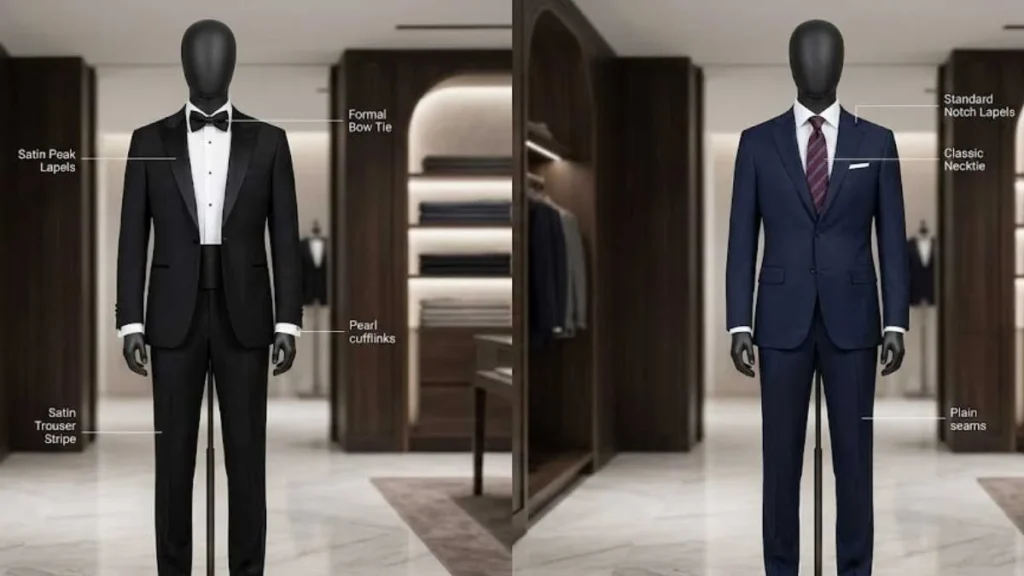
Traditionally, a tuxedo features a black or midnight-blue jacket with satin-faced lapels, matching trousers with satin side stripes, a formal white shirt, and a black bow tie. These satin accents are more than decorative; they’re the defining elements that elevate the garment from businesswear to formalwear.
The Key Components
A well-constructed tuxedo consists of several carefully coordinated pieces.
The Jacket
The jacket is the centerpiece of the ensemble. Most of them feature one of three lapel styles:
- Peak lapels: Formal and elegant, often considered the classic choice.
- Shawl lapels: Rounded and smooth, offering a refined, sophisticated appearance.
- Notch lapels: Less traditional but increasingly common in modern tuxedo designs.
The satin facing on the lapels creates visual contrast and distinguishes the tuxedo from a standard suit jacket.
The Trousers
The trousers typically match the jacket fabric and include:
- Satin stripe running down each outer seam
- No belt loops
- Side adjusters or suspender buttons
- A cleaner, more streamlined silhouette
The Dress Shirt
Traditional tuxedo shirts often include:
- Pleated or bib fronts
- French cuffs
- Wingtip or spread collars
- Stud closures instead of standard buttons
Modern black-tie events may allow simpler formal shirts, but the overall appearance should remain polished and elegant.
The Bow Tie
A black bow tie is the standard companion. While pre-tied options exist, a hand-tied bow tie generally creates a more authentic and refined look.
Formal Footwear
Patent leather shoes remain the classic option, though highly polished black oxfords are also widely accepted.
Tuxedo vs. Suit: What’s the Difference?
Many first-time formalwear shoppers struggle to distinguish between a tuxedo and a suit.
| Feature | Tuxedo | Suit |
| Lapels | Satin-faced | Same fabric as the jacket |
| Trouser Detail | Satin stripe | No stripe |
| Neckwear | Bow tie preferred | Regular tie or no tie |
| Formality | Black-tie events | Business and social occasions |
| Shirt Style | Formal dress shirt | Standard dress shirt |
When Should You Wear a Tuxedo?
Understanding dress codes helps avoid being overdressed or underdressed.
Black-Tie Events
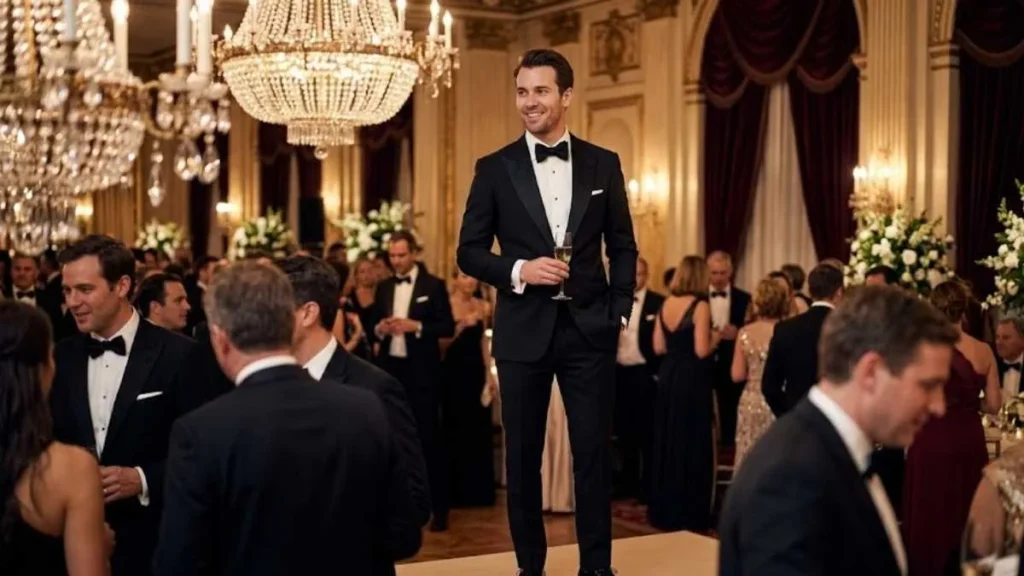
This is the most common reason to wear a tuxedo. If an invitation states “Black Tie,” a tuxedo is generally expected.
Formal Weddings
Evening weddings with upscale venues often call for tuxedos, especially for the groom, groomsmen, or close family members.
Galas and Charity Functions
Fundraising events, award ceremonies, and luxury social gatherings frequently require black-tie attire.
Proms and Special Celebrations
Many young men choose it for prom because they provide a timeless, memorable appearance for a milestone event.
Choosing the Right Fit
The difference between looking elegant and looking uncomfortable often comes down to fit.
The jacket should:
- Sit naturally on the shoulders
- Button comfortably without pulling
- Allow free arm movement
- Cover the seat without appearing oversized
Trousers should:
- Sit at the natural waist
- Fall cleanly with minimal break
- Avoid excessive bunching around the ankles
A small portion of the shirt cuff, typically around a quarter to half an inch, should be visible beneath the jacket sleeve.
Modern Trends
While classic black remains the benchmark, the modern variants have evolved considerably.
Popular contemporary options include:
- Midnight blue tuxedos
- Velvet dinner jackets
- White dinner jackets for warm-weather events
- Double-breasted tuxedos
- Textured fabrics and subtle patterns
That said, timeless styles generally age better in photographs and offer greater versatility across different formal occasions.
Common Mistakes to Avoid
Even an expensive tuxedo can look out of place if styled incorrectly. Traditional black-tie attire calls for a bow tie, not a standard necktie.
Most trousers are designed without belt loops. Suspenders or side adjusters create a cleaner look. Dress sneakers, loafers, or casual leather shoes can undermine an otherwise formal outfit.
Oversized jackets and excessively slim trousers are among the most noticeable formalwear mistakes. It can be perfect for a black-tie gala but awkward at a casual daytime wedding. Always consider the event’s expectations.
Frequently Asked Questions
Do I need patent leather shoes with it?
Not necessarily. Highly polished black oxfords are widely accepted and often preferred for versatility.
Can I wear a regular tie with it?
A bow tie remains the traditional and most appropriate choice for black-tie attire.
Should a groom wear a tuxedo?
For formal evening weddings, it is often the most elegant choice and helps distinguish the groom from other guests.
Conclusion
A tuxedo remains one of the most iconic garments in men’s fashion because it represents precision, elegance, and occasion. Its satin lapels, formal accessories, and refined silhouette communicate a level of sophistication that an ordinary suit simply cannot match. Whether you’re attending a black-tie gala, standing at the altar, or celebrating a milestone event, choosing the right and ensuring it fits properly can transform not only how you look but also how confidently you carry yourself. In an era of changing dress codes, it continues to prove that true style rarely goes out of fashion.