

Best hiking hats do more than shade your face. They protect your neck and ears, regulate temperature, reduce glare, and help prevent sunburn during long outdoor adventures. Whether you’re tackling desert trails, mountain summits, forest hikes, or multi-day backpacking trips, choosing the right hat can make a noticeable difference.
This guide breaks down the features that actually matter and helps you select the best hiking hat for your specific needs.
Why a Hiking Hat Matters More Than Most People Think
Many hikers underestimate how much cumulative sun exposure they receive during a full day outdoors. Sunscreen is important, but physical protection remains one of the most effective defenses against harmful UV rays.

A quality hiking hat can help:
- Protect the face, ears, scalp, and neck from UV exposure
- Reduce eye strain caused by bright sunlight
- Improve comfort during hot weather
- Manage sweat and moisture
- Provide light rain protection
- Shield against insects and overhanging vegetation
On exposed trails where shade is limited, a hat often becomes essential gear rather than an optional accessory.
Key Features to Look for in the Best Hiking Hats
UPF Sun Protection
One of the first specifications worth checking is the hat’s Ultraviolet Protection Factor (UPF) rating.
A UPF 50+ hat blocks approximately 98% of harmful UV radiation, making it ideal for hiking in sunny climates, high elevations, or desert environments.
Lightweight synthetic fabrics with certified UPF ratings generally outperform standard cotton hats for extended outdoor use.
Wide Brim Coverage
Brim size directly affects protection.
A brim between 2.5 and 4 inches typically provides an excellent balance between protection and practicality.
Breathability
A hat that traps heat quickly becomes uncomfortable.
Ventilation becomes particularly important during summer hikes and steep climbs where body temperature rises quickly.
Weight and Packability
Backpackers often prioritize lightweight gear.
The best hiking hats can be folded, crushed, or packed into a backpack without losing shape. Soft-brim designs tend to travel better than rigid hats.
Adjustable Fit
Wind can turn an ill-fitting hat into a frustration. A secure fit is especially valuable on exposed ridgelines and coastal trails.
Different Types of Hiking Hats
| Hat Type | Best For | Main Benefits | Trade-Offs |
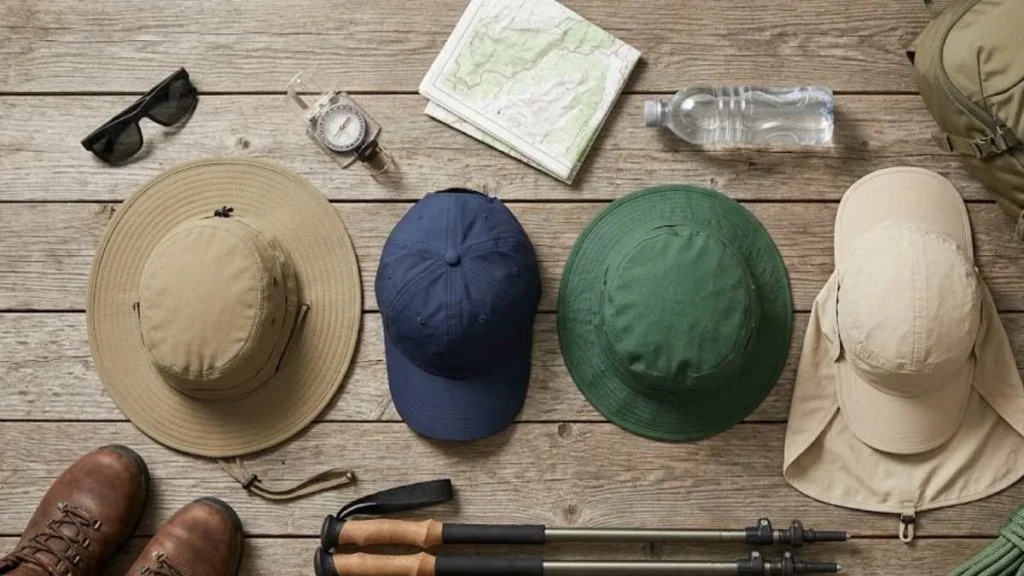
| Wide-Brim Sun Hats | Desert hiking, summer backpacking, exposed trails | Maximum face, ear, and neck coverage; excellent UV protection | Can feel bulky in wind or tight brush |
| Baseball-Style Caps | Short hikes, cooler weather, casual day hikes | Lightweight, familiar, easy to pack | Leaves ears and neck exposed |
| Bucket Hats | Casual hiking, travel, mixed conditions | Better side coverage than caps; packable and lightweight | Less coverage than a wide-brim hat |
| Legionnaire Hats | Desert climates, tropical hikes, high-UV environments | Strong sun protection with built-in neck cape | Less versatile and not always the most comfortable-looking option |
Choosing the Best Hiking Hat for Your Environment
Hot and Dry Climates
For desert or canyon hiking, prioritize:
- UPF 50+ fabric
- Large brim
- Light colors
- Maximum ventilation
Sun exposure is often the primary concern in these environments.
Humid Conditions
In humid regions, moisture management becomes critical.
Look for:
- Mesh side panels
- Quick-drying materials
- Lightweight fabrics
Heavy hats can become uncomfortable when humidity levels rise.
Mountain Hiking
Mountain environments combine intense UV exposure with rapidly changing weather.
Choose a hat that offers:
- Wind resistance
- Adjustable fit
- Good sun protection
- Water-resistant materials
High elevations increase UV intensity significantly, even on cooler days.
Backpacking Trips
Long-distance hikers often prioritize versatility.
The ideal backpacking hat should:
- Pack easily
- Dry quickly
- Weigh very little
- Provide all-day comfort
Durability also becomes more important during multi-day adventures.
Common Hiking Hat Mistakes
Even experienced hikers sometimes choose hats based solely on appearance.
Common mistakes include selecting fashion over functionality, ignoring UV protection ratings, choosing dark colors in hot climates, buying hats without ventilation, and overlooking fit and adjustability
A hat that looks great in the store may become uncomfortable after several hours on the trail.
Care Tips to Extend the Life of Your Hiking Hat
Proper maintenance improves both performance and longevity.
To keep your hiking hat in excellent condition:
- Rinse sweat and salt after long hikes
- Air dry instead of using high heat
- Store in a cool, dry location
- Follow manufacturer washing instructions
- Avoid crushing structured brims unnecessarily
Regular care helps preserve fabric performance and sun-protection properties.
Frequently Asked Questions
What color hiking hat is best?
Light colors such as beige, light gray, and khaki tend to reflect sunlight better and remain cooler during hot-weather hikes.
Do hiking hats need UPF protection?
While not mandatory, UPF-rated fabrics offer measurable UV protection and are highly recommended for frequent outdoor use.
Can I wear a bucket hat for hiking?
Absolutely. Bucket hats are lightweight, packable, and provide better coverage than traditional caps, making them a practical choice for many hikers.
Conclusion
The best hiking hats combine sun protection, breathability, comfort, and durability. Rather than focusing solely on style, consider the conditions you’ll encounter most often. A wide-brim hat may be ideal for exposed summer trails, while a lightweight cap or bucket hat may suit shorter hikes and cooler weather.
The right choice ultimately depends on your environment, hiking style, and personal comfort preferences. Invest in a hat that protects you from the elements, and you’ll likely find it becomes one of the most valuable pieces of gear in your outdoor kit.