



Online advertising has become an unavoidable part of the internet experience. From autoplay videos and pop-up banners to highly personalized tracking ads, many users feel overwhelmed by the sheer volume of advertising they encounter daily. As a result, ad blocking has evolved from a niche tool used by tech enthusiasts into a mainstream privacy and browsing solution.
But ad blocking is no longer just about hiding annoying banners. In 2026, it sits at the intersection of privacy, website sustainability, cybersecurity, and user experience. Understanding how it works, and the trade-offs involved, can help you make informed decisions about your online habits.
What Is Ad Blocking?
Ad blocking refers to the use of software, browser extensions, network tools, or built-in browser features that prevent advertisements from loading on websites, apps, or streaming platforms.
Rather than simply hiding visible ads, modern ad blockers often stop advertising scripts from loading altogether. This can reduce page clutter, improve loading speeds, and limit data collection by advertising networks.
How Ad Blockers Work
Most ad blockers rely on filter lists that identify known advertising and tracking domains. When a webpage loads, the blocker compares incoming requests against these lists and prevents matching elements from loading.
For example, if a news website attempts to load ads from multiple advertising networks, the ad blocker intercepts those requests before they reach your browser.
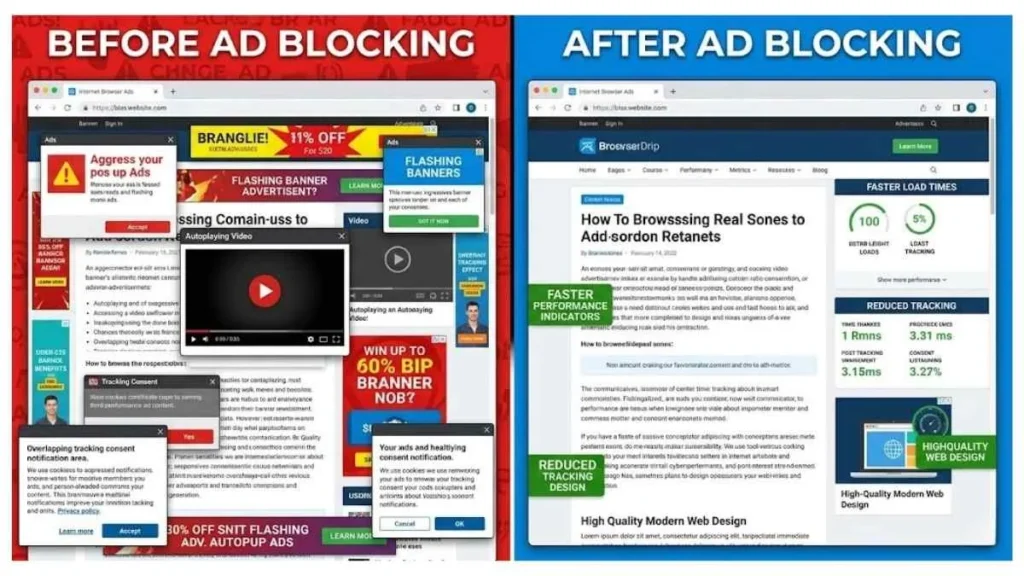
The result is often a webpage that loads faster and displays less visual noise.
Benefits of Ad Blocking
Improved Privacy
Many online ads rely on behavioral tracking. Advertising networks may collect browsing activity across multiple websites to create detailed user profiles.
Ad blockers can reduce this tracking by blocking third-party scripts and cookies before they gather data.
For privacy-conscious users, this is often the primary motivation for installing an ad blocker.
Faster Page Load Times
Advertising scripts can significantly increase page weight and loading times.
When these scripts are blocked:
- Pages often load more quickly
- Less bandwidth is consumed
- Mobile browsing becomes more efficient
- Device battery life may improve
This benefit is particularly noticeable on slower internet connections.
Reduced Distractions
Modern websites frequently contain:
- Pop-up ads
- Auto-playing videos
- Sticky banners
- Interstitial advertisements
Blocking these elements can improve readability and make content easier to consume.
For students, researchers, and professionals, fewer interruptions often translate into better focus.
Enhanced Security
One overlooked advantage of ad blocking is protection against malicious advertising, often called “malvertising.”
Cybercriminals occasionally exploit advertising networks to distribute harmful code through legitimate websites. Blocking ad delivery reduces exposure to these threats.
While ad blockers are not a replacement for antivirus software, they can add an extra layer of protection.
The Drawbacks of Ad Blocking
Many websites depend on advertising to fund content creation, hosting, and staff salaries. When ads are blocked, publishers lose a portion of their revenue. This creates a difficult balance: users want a cleaner experience, while websites need sustainable income to remain operational.
Not all blocked scripts are purely advertising-related. When a website behaves unexpectedly, temporarily disabling the blocker may help identify the issue.

Some internet users view ad blocking as a form of consumer protection, while others see it as denying compensation to content creators. There is no universal answer. Many people choose a middle ground by supporting trusted websites through subscriptions, donations, or selective whitelisting.
Types of Ad Blocking Solutions
Browser Extensions
These remain the most popular option because they are easy to install and customize.
They generally provide:
- Custom filter lists
- Tracker blocking
- Cosmetic filtering
- Whitelisting controls
Privacy-Focused Browsers
Many modern browsers include built-in ad and tracker blocking features.
This approach simplifies setup while providing protection without additional extensions.
DNS-Based Ad Blocking
DNS-level blocking prevents ad requests before they even reach a browser.
Advantages include:
- Network-wide protection
- Device-independent filtering
- Lower resource usage
This method is often favored by advanced users and households with multiple connected devices.
Best Practices for Using Ad Blockers
Use established ad blockers with transparent privacy policies and active development communities. Avoid unknown extensions that may collect user data or inject their own advertisements. Advertising techniques evolve constantly. Regular updates help maintain effectiveness and security.
If a website consistently provides valuable content, consider allowing non-intrusive ads or supporting it through alternative means. No single tool provides complete online protection.
Frequently Asked Questions
Is ad blocking legal?
In most countries, using ad-blocking software is legal. Users generally have the right to control what content loads on their devices.
Do ad blockers stop all ads?
No. Some advertisements may still appear, especially if websites use new delivery methods or if filter lists have not been updated.
Can ad blockers improve privacy?
Yes. Many ad blockers reduce tracking by preventing advertising networks from collecting browsing data across websites.
Conclusion
Ad blocking has become far more than a convenience feature. In 2026, it serves as a powerful tool for improving privacy, enhancing security, reducing distractions, and creating a faster browsing experience. At the same time, users should understand the broader impact on publishers and content creators who rely on advertising revenue.
The most balanced approach is often selective use: block intrusive ads and trackers while supporting trustworthy websites that provide genuine value. By combining ad blocking with smart privacy practices, users can enjoy a cleaner internet experience without losing sight of the ecosystem that keeps much of the web accessible and free.